Collection scope
The digital archive currently reflects 201 cataloged records, with references spanning 119 culture and community terms, 67 geographic entries, and 8 dated groupings.
Public Introduction
This public homepage introduces the collection as a teaching and research resource while keeping image-rich portal access behind a password layer shaped by cultural sensitivity and collections stewardship.
The public archive lists records and collection scope. The full research portal opens with a password for authorized users who need image-bearing catalog access.
About the Collection
The collection supports classroom learning, object study, cataloging practice, and broader public understanding through careful description and responsible presentation.
The digital archive currently reflects 201 cataloged records, with references spanning 119 culture and community terms, 67 geographic entries, and 8 dated groupings.
Public pages emphasize object identity, place, chronology, and professional catalog language while limiting image access in support of cultural sensitivity and rights stewardship.
Authorized users can open the fuller portal for record review, image comparison, and research navigation across the catalog’s richer descriptive fields.
Digitization Credits
Department of Art, College of Liberal Arts, Jackson State University.
Africana Digital Humanities Lab, supporting catalog development, digital presentation, and public interpretation.
Supported by a subaward from the University of Southern Mississippi Mississippi Digital Humanities Hub.
3D Collection Feature
Explore a rotating 3D model from the protected portal. Drag to rotate, and use scroll or pinch gestures to zoom in for closer study.
This interactive model is available inside the password-protected portal so authorized users can examine the object from multiple angles while preserving the public-facing archive structure.
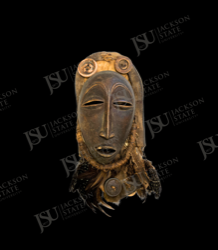
When the portal is open, drag to rotate and use scroll or pinch to zoom.
Archive Entry Points
Catalog Values
The public-facing record set is written to support teaching and research while remaining attentive to context, rights, and the ethical presentation of the collection.
Records prioritize clear titles, geographic and cultural context, and restrained descriptive claims suitable for a public museum-style setting.
The archive remains open to continued catalog development as new research, identifications, and contextual documentation become available.